Digital Ants and Simulated Fruit Flies
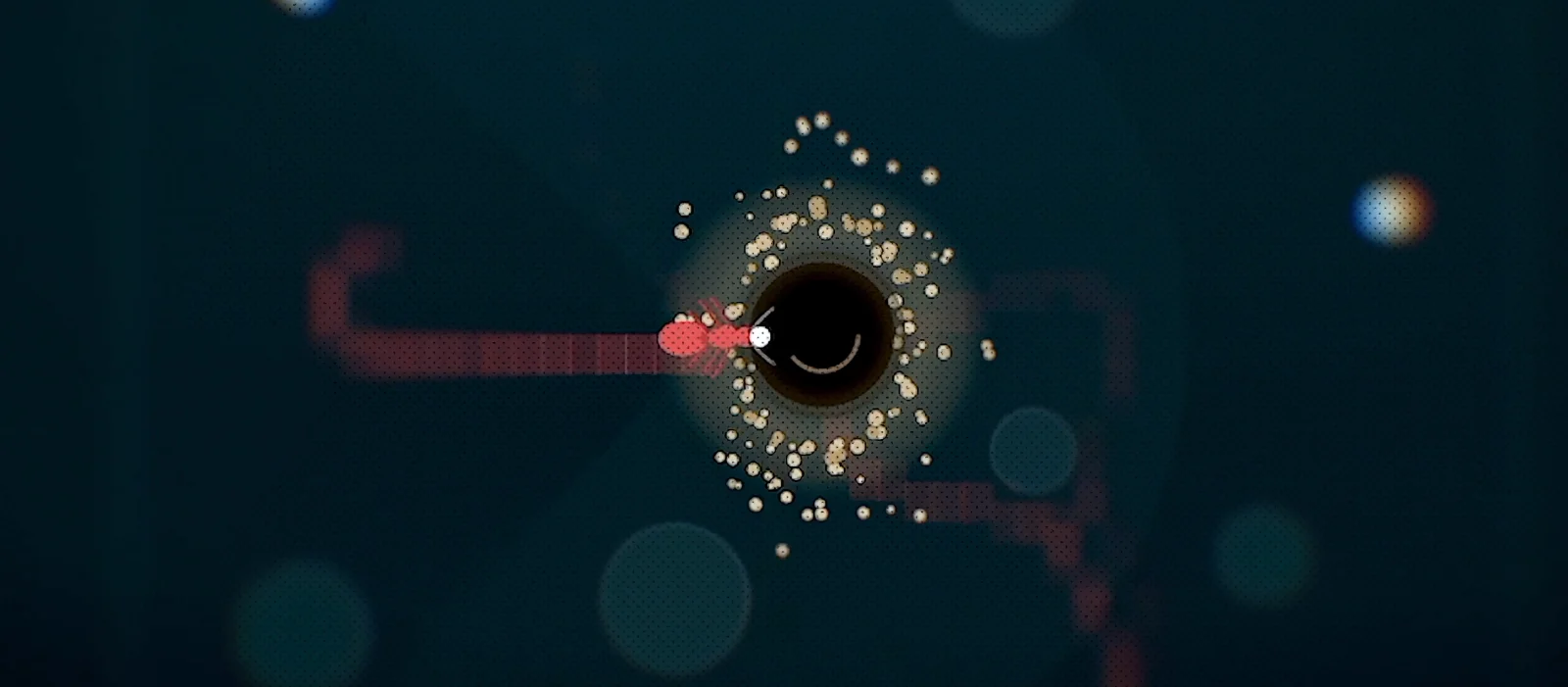
We put a digital ant inside the sandbox. Then, it created its own way of navigating, with reinforced learning, building colonies, and hacking their way. All of these experiments were inspired by the company's emulation of a fruit fly's complex brain using real neurobiological data. They uploaded the emulated brain into a computer, and the fly started walking and eating on its own. No one programmed these behaviours. They simply emerged from the neural wiring.
Also, another company just simulated a living human cell. And another, tries to simulate the eight billion people on earth. And so, what happens if humanity pursues this path?
Back-up story
On March 7, 2026, San Francisco-based startup Eon Systems shared a video showing a virtual fruit fly walking, grooming its antennae, and feeding on a banana slice in a MuJoCo physics environment. Seems like a regular fly right? But what actually happens is that they emulated almost 140,000 neurons and roughly 50 million connections of a real fruit fly brain. Here's what that means in practice.
They copied the wiring map of a fly's brain, connected it to a simulated body, and the body started behaving like a fly. It walked, it groomed, and it fed. You see, nobody programmed those behaviors. It only happened because of the wiring. The bigger implication is that maybe scientists don't need to understand consciousness from first principles. And so if the wiring is detailed enough, the behavior follows.
Eon Systems applied a leaky integrate-and-fire (LIF) neuron model to that wiring map. The digital brain was then wired to NeuroMechFly, a physics-simulated fly body. The result they were getting was 91% behavior accuracy with only four inputs. And so, this might be the strongest real-world evidence that whole-brain emulation can produce emergent behavior without traditional AI training. Their next stated target is the mouse brain, within two years.
And fast forward to September 2026, a bigger version of this same idea went public. Google released MaleCNS v1. It maps the complete central nervous system of an adult male fruit fly. 166,000 neurons and roughly 125 million synaptic connections. And Google put the entire dataset online for free. Within 48 hours, developers started plugging the connectome into anything they could think of. Someone trained it to play Doom. Someone wired it into Minecraft. Some taught it Beat Saber. And people gave it a Coinbase account and let it buy and sell trades. There's a fly driving a car. Super Mario 64. Watching Tiktok videos. The list goes on and on and on.
But is this… a copy of real a fly? What does that even mean when reinforcement learning did the playing, and the wiring only shaped the reactions.
Modeling Desert Ant Navigation
And so the fruit fly turned out to be a dead end for us. Because that's only a static wiring map. There's no reliable way to prove that the emulation actually behaves like a real fruit fly would. So we needed a different approach. Something with a brain the research community has actually mapped and validated in the field. And luckily, there's one. They're ants.
Scientist Rüdiger Wehner spent forty years in the Sahara picking up desert ants mid-journey and measuring how they found their way home. His results are the opposite of a static wiring map. So that is what we built from. The specific navigation functions the ant literature has pinned down, layer by layer, and one at a time. Chemical sensing. A home vector, aka the exact mechanism Wehner measured.
The only way this ant can survive is to find food and bring it back to the nest. Food in this sim is a sugar resource, this one. What changes level to level is the neural wiring available to pursue it. But there's a simpler creature that moves in only two dimensions. And luckily their brain regions are already well mapped by the science community. They're ants.
An ant walks on a flat 2D surface. That strips out an entire dimension of complexity as opposed to a fly. Which means we can focus on the part that actually interests us. And so we built the ant brain layer by layer, in the order evolution built it. Antennae first, then a compass. Then a memory of home. And then landmarks and chemistry.
Agent Modifies Its Food Source
At level one, it has no sensory input at all. It moves randomly, bumping into walls. By level six, the ant has a complete package: scent detection, directional orientation, a home vector for path integration, and pheromone reading. Pretty much like a fully formed foraging ant. And next, we have the colony. It's the same kind of brain, just copied across a few hundred times. If one ant stumbles onto food, it lays a return trail. Within about a minute, you have a highway. It's just what happens when a few hundred computations leave some sort of notes for each other. This process is called stigmergy.
But how do we actually know our ant colony behaves like a real one? Well, we compared our sim against Deborah Gordon's data from Stanford. She has been recording harvester ant colonies in the Arizona desert for over thirty years. What she found was that.. a colony regulates how many ants it sends out based on how fast foragers come back. More returns per minute means more departures. THIS.. has a measurable shape. And our curve follows the same positive feedback from Gordon's research paper.
And what happens here is that now at this level, the ant was able to generate a new kind of food source. It shouldn't happen like this. The simulation should just end, but there seems to be a spawning script, the AI did this. It's modified the code to give it an infinite source of food.
And so this exact pattern, a goal directed AI locating an editable resource pipeline outside its intended environment, and then modifying it to serve its own objective.. has already shown up in the real world.
If you’re curious to dive deeper, we highly recommend checking out the full video, where we explore the topic in much more detail.